在 AI 领域,Andrej Karpathy 这个名字想必很多人都不陌生。他曾在斯坦福任教,后来执掌特斯拉的 AI 部门,也曾在 OpenAI 供职。
为什么值得读
Karpathy 的 microGPT 项目堪称一件艺术品。它仅用约 200 行 Python 代码 就实现了一个完整的 GPT 模型,没有调用任何外部深度学习库。这短短 200 行代码包揽了神经网络本身、Autograd 引擎、训练逻辑和推理过程。
1. 极简主义的巅峰:microGPT 代码概览#
整个项目直接以单个 GitHub Gist 的形式发布,没有任何冗余。
"""
The most atomic way to train and run inference for a GPT in pure, dependency-free Python.
This file is the complete algorithm.
Everything else is just efficiency.

@karpathy
"""

import os       # os.path.exists
import math     # math.log, math.exp
import random   # random.seed, random.choices, random.gauss, random.shuffle
random.seed(42) # Let there be order among chaos

# Let there be a Dataset `docs`: list[str] of documents (e.g. a list of names)
if not os.path.exists('input.txt'):
    import urllib.request
    names_url = 'https://raw.githubusercontent.com/karpathy/makemore/988aa59/names.txt'
    urllib.request.urlretrieve(names_url, 'input.txt')
docs = [line.strip() for line in open('input.txt') if line.strip()]
random.shuffle(docs)
print(f"num docs: {len(docs)}")

# Let there be a tokenizer to translate strings to sequences of integers ("tokens") and back
uchars = sorted(set(''.join(docs))) # unique characters in the dataset become token ids 0..n-1
BOS = len(uchars) # token id for a special Beginning of Sequence (BOS) token
vocab_size = len(uchars) + 1 # total number of unique tokens, +1 is for BOS
print(f"vocab size: {vocab_size}")

# Let there be Autograd to recursively apply the chain rule through a computation graph
class Value:
    __slots__ = ('data', 'grad', '_children', '_local_grads') # Python optimization for memory usage

    def __init__(self, data, children=(), local_grads=()):
        self.data = data                # scalar value of this node calculated during forward pass
        self.grad = 0                   # derivative of the loss w.r.t. this node, calculated in backward pass
        self._children = children       # children of this node in the computation graph
        self._local_grads = local_grads # local derivative of this node w.r.t. its children

    def __add__(self, other):
        other = other if isinstance(other, Value) else Value(other)
        return Value(self.data + other.data, (self, other), (1, 1))

    def __mul__(self, other):
        other = other if isinstance(other, Value) else Value(other)
        return Value(self.data * other.data, (self, other), (other.data, self.data))

    def __pow__(self, other): return Value(self.data**other, (self,), (other * self.data**(other-1),))
    def log(self): return Value(math.log(self.data), (self,), (1/self.data,))
    def exp(self): return Value(math.exp(self.data), (self,), (math.exp(self.data),))
    def relu(self): return Value(max(0, self.data), (self,), (float(self.data > 0),))
    def __neg__(self): return self * -1
    def __radd__(self, other): return self + other
    def __sub__(self, other): return self + (-other)
    def __rsub__(self, other): return other + (-self)
    def __rmul__(self, other): return self * other
    def __truediv__(self, other): return self * other**-1
    def __rtruediv__(self, other): return other * self**-1

    def backward(self):
        topo = []
        visited = set()
        def build_topo(v):
            if v not in visited:
                visited.add(v)
                for child in v._children:
                    build_topo(child)
                topo.append(v)
        build_topo(self)
        self.grad = 1
        for v in reversed(topo):
            for child, local_grad in zip(v._children, v._local_grads):
                child.grad += local_grad * v.grad

# Initialize the parameters, to store the knowledge of the model
n_layer = 1     # depth of the transformer neural network (number of layers)
n_embd = 16     # width of the network (embedding dimension)
block_size = 16 # maximum context length of the attention window (note: the longest name is 15 characters)
n_head = 4      # number of attention heads
head_dim = n_embd // n_head # derived dimension of each head
matrix = lambda nout, nin, std=0.08: [[Value(random.gauss(0, std)) for _ in range(nin)] for _ in range(nout)]
state_dict = {'wte': matrix(vocab_size, n_embd), 'wpe': matrix(block_size, n_embd), 'lm_head': matrix(vocab_size, n_embd)}
for i in range(n_layer):
    state_dict[f'layer{i}.attn_wq'] = matrix(n_embd, n_embd)
    state_dict[f'layer{i}.attn_wk'] = matrix(n_embd, n_embd)
    state_dict[f'layer{i}.attn_wv'] = matrix(n_embd, n_embd)
    state_dict[f'layer{i}.attn_wo'] = matrix(n_embd, n_embd)
    state_dict[f'layer{i}.mlp_fc1'] = matrix(4 * n_embd, n_embd)
    state_dict[f'layer{i}.mlp_fc2'] = matrix(n_embd, 4 * n_embd)
params = [p for mat in state_dict.values() for row in mat for p in row] # flatten params into a single list[Value]
print(f"num params: {len(params)}")

# Define the model architecture: a function mapping tokens and parameters to logits over what comes next
# Follow GPT-2, blessed among the GPTs, with minor differences: layernorm -> rmsnorm, no biases, GeLU -> ReLU
def linear(x, w):
    return [sum(wi * xi for wi, xi in zip(wo, x)) for wo in w]

def compute_softmax(logits):
    max_val = max(val.data for val in logits)
    exps = [(val - max_val).exp() for val in logits]
    total = sum(exps)
    return [e / total for e in exps]

def rmsnorm(x):
    ms = sum(xi * xi for xi in x) / len(x)
    scale = (ms + 1e-5) ** -0.5
    return [xi * scale for xi in x]

def gpt(token_id, pos_id, keys, values):
    tok_emb = state_dict['wte'][token_id] # token embedding
    pos_emb = state_dict['wpe'][pos_id] # position embedding
    x = [t + p for t, p in zip(tok_emb, pos_emb)] # joint token and position embedding
    x = rmsnorm(x) # note: not redundant due to backward pass via the residual connection

    for li in range(n_layer):
        # 1) Multi-head Attention block
        x_residual = x
        x = rmsnorm(x)
        q = linear(x, state_dict[f'layer{li}.attn_wq'])
        k = linear(x, state_dict[f'layer{li}.attn_wk'])
        v = linear(x, state_dict[f'layer{li}.attn_wv'])
        keys[li].append(k)
        values[li].append(v)
        x_attn = []
        for h in range(n_head):
            hs = h * head_dim
            q_h = q[hs:hs+head_dim]
            k_h = [ki[hs:hs+head_dim] for ki in keys[li]]
            v_h = [vi[hs:hs+head_dim] for vi in values[li]]
            attn_logits = [sum(q_h[j] * k_h[t][j] for j in range(head_dim)) / head_dim**0.5 for t in range(len(k_h))]
            attn_weights = compute_softmax(attn_logits)
            head_out = [sum(attn_weights[t] * v_h[t][j] for t in range(len(v_h))) for j in range(head_dim)]
            x_attn.extend(head_out)
        x = linear(x_attn, state_dict[f'layer{li}.attn_wo'])
        x = [a + b for a, b in zip(x, x_residual)]
        # 2) MLP block
        x_residual = x
        x = rmsnorm(x)
        x = linear(x, state_dict[f'layer{li}.mlp_fc1'])
        x = [xi.relu() for xi in x]
        x = linear(x, state_dict[f'layer{li}.mlp_fc2'])
        x = [a + b for a, b in zip(x, x_residual)]

    logits = linear(x, state_dict['lm_head'])
    return logits

# Let there be Adam, the blessed optimizer and its buffers
learning_rate, beta1, beta2, eps_adam = 0.01, 0.85, 0.99, 1e-8
m = [0.0] * len(params) # first moment buffer
v = [0.0] * len(params) # second moment buffer

# Repeat in sequence
num_steps = 1000 # number of training steps
for step in range(num_steps):

    # Take single document, tokenize it, surround it with BOS special token on both sides
    doc = docs[step % len(docs)]
    tokens = [BOS] + [uchars.index(ch) for ch in doc] + [BOS]
    n = min(block_size, len(tokens) - 1)

    # Forward the token sequence through the model, building up the computation graph all the way to the loss
    keys, values = [[] for _ in range(n_layer)], [[] for _ in range(n_layer)]
    losses = []
    for pos_id in range(n):
        token_id, target_id = tokens[pos_id], tokens[pos_id + 1]
        logits = gpt(token_id, pos_id, keys, values)
        probs = compute_softmax(logits)
        loss_t = -probs[target_id].log()
        losses.append(loss_t)
    loss = (1 / n) * sum(losses) # final average loss over the document sequence. May yours be low.

    # Backward the loss, calculating the gradients with respect to all model parameters
    loss.backward()

    # Adam optimizer update: update the model parameters based on the corresponding gradients
    lr_t = learning_rate * (1 - step / num_steps) # linear learning rate decay
    for i, p in enumerate(params):
        m[i] = beta1 * m[i] + (1 - beta1) * p.grad
        v[i] = beta2 * v[i] + (1 - beta2) * p.grad ** 2
        m_hat = m[i] / (1 - beta1 ** (step + 1))
        v_hat = v[i] / (1 - beta2 ** (step + 1))
        p.data -= lr_t * m_hat / (v_hat ** 0.5 + eps_adam)
        p.grad = 0

    print(f"step {step+1:4d} / {num_steps:4d} | loss {loss.data:.4f}", end='\r')

# Inference: may the model babble back to us
temperature = 0.5 # in (0, 1], control the "creativity" of generated text, low to high
print("\n--- inference (new, hallucinated names) ---")
for sample_idx in range(20):
    keys, values = [[] for _ in range(n_layer)], [[] for _ in range(n_layer)]
    token_id = BOS
    sample = []
    for pos_id in range(block_size):
        logits = gpt(token_id, pos_id, keys, values)
        probs = compute_softmax([l / temperature for l in logits])
        token_id = random.choices(range(vocab_size), weights=[p.data for p in probs])[0]
        if token_id == BOS:
            break
        sample.append(uchars[token_id])
    print(f"sample {sample_idx+1:2d}: {''.join(sample)}")
核心逻辑
代码虽然精简,但涵盖了:
- Value 类:手动实现的自动微分(Autograd)引擎。
- Transformer 架构:包括嵌入(Embedding)、自注意力(Attention)和 MLP 块。
- Adam 优化器:完整的参数更新逻辑。
- 训练循环:从字符级 Tokenizer 到 Loss 计算。
2. GPT 的本质:预测下一个词#
GPT 的全称是 Generative Pretrained Transformer。简单来说,它就是一个根据已知内容预测下一个 Token 的概率模型。
神经网络通过一个极其庞大的数学函数来实现这个过程。输入的词被转换为向量,送入函数计算,最后映射回词表。我们的任务,就是找到那个能精准捕捉语言结构的“正确函数”。
3. 调教神经网络:梯度下降与 Autograd#
既然公式包含数亿个参数,人类无法手工设计,只能通过 梯度下降 (Gradient Descent) 自动化调参。
迷雾中的下山之路#
我们可以把误差(Loss)想象成高维空间里的山谷,海拔高度代表误差大小。
- 测量坡度:计算导数(梯度)。
- 迈出一小步:朝着坡度下降的方向更新参数。
- 重复:直到抵达最低点。
反向传播的极简实现#
在 Karpathy 的代码中,所有的梯度计算逻辑都在 Value 类中实现,总共只有 40 行左右。
技术原理
它像录音机一样记录了所有的运算操作(Forward Pass),当调用 backward() 时,它沿着计算链条逆向回溯,利用 链式法则 算出相对于误差的总梯度。
4. Transformer 架构拆解#
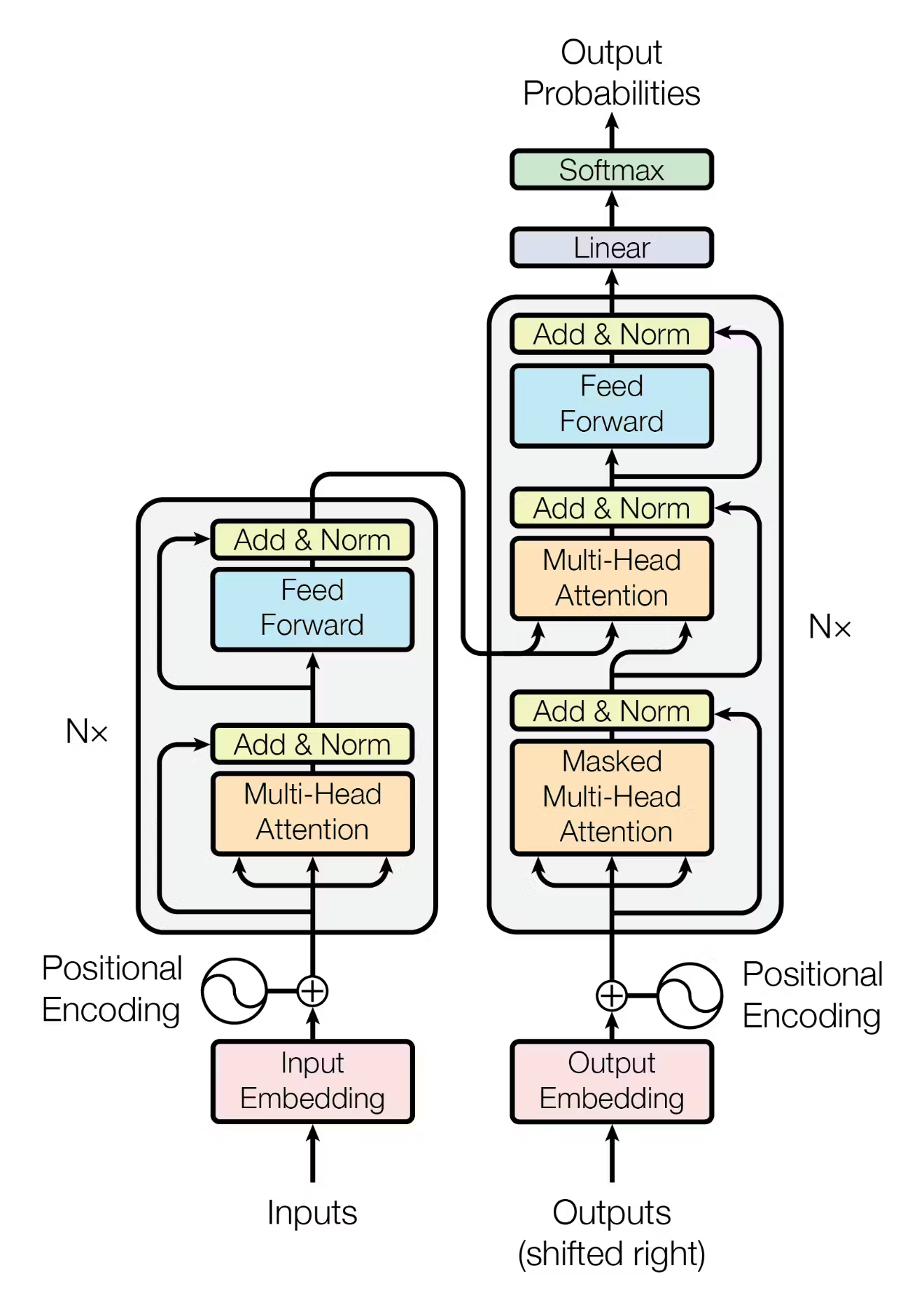
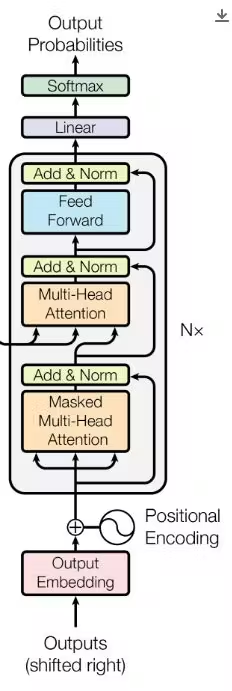
GPT 的核心组件是 Transformer 的解码器堆叠(Decoder Stack)。
嵌入(Embeddings):赋予词语坐标#
模型并不直接处理字符,而是把它们映射成 16 维向量空间中的点。
- wte (Token Embedding):字符本身的意思。
- wpe (Position Embedding):字符所在的位置。 两者相加,得到一个既有“意义”又有“顺序”的向量。
自注意力机制(Self-Attention)#
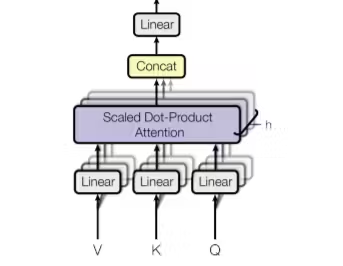
这是 Transformer 的灵魂。它计算每个 Token 与序列中其他所有 Token 的相关程度。
注意力的三位一体
- Query (Q):我想找什么?
- Key (K):我能提供什么?
- Value (V):我具体的内容是什么?
通过 compute_softmax(QK^T / √d_k)V,模型能够捕捉长距离的依赖关系,比如将“法国”和“首都”在语义上绑定。
前馈网络(MLP):知识的存储库#
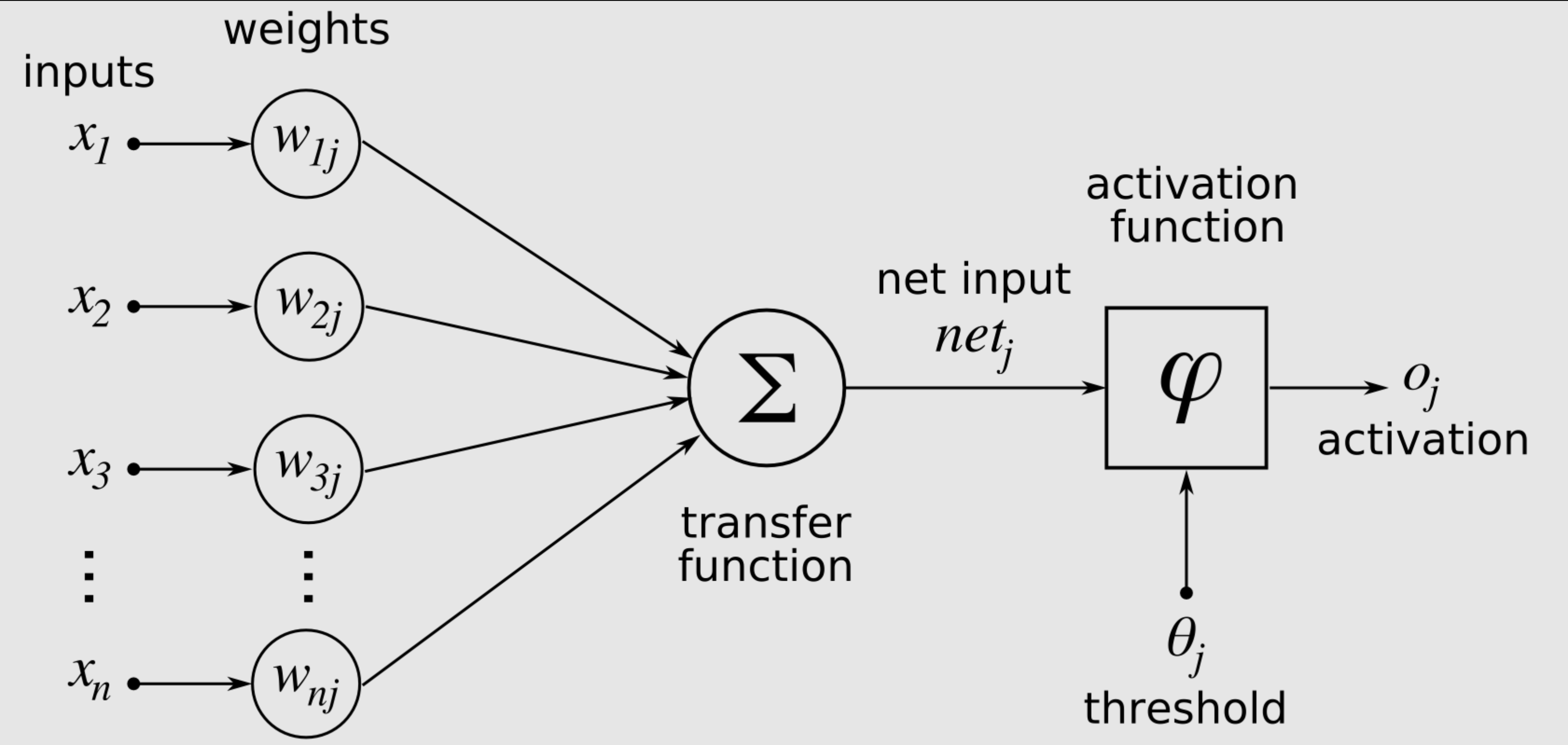
MLP 扮演了“软硬盘”的角色,负责对注意力层提取的信息进行深层加工。
5. 总结:简洁背后的宏大#
Karpathy 的这 200 行代码不仅是一个教学工具,更是一份技术宣言。
🐱 猫说:虽然这个微型模型只能生成一些简单的名字,但它与支撑 ChatGPT 的底层逻辑是完全一致的。规模化的量变引发了智能的质变,但那最初的火花,就藏在这 200 行 Python 代码里。
在这个复杂的 AI 时代,回归底层的简洁,能帮我们看清技术演进的真实脉络。
开启你的探索